Women’s History Month – Pari’s Influence

This month during Women’s History Month, I asked Pari Danian, my dear, multi-talented friend, what woman writer influenced her. Below is Pari’s response. I have to admit that I am not surprised by Pari’s selection of Oriana Fallaci. Pari, like Ms. Fallaci is a powerful, gifted artist who is fearless in executing her craft. Read on…you’ll be amazed and inspired!
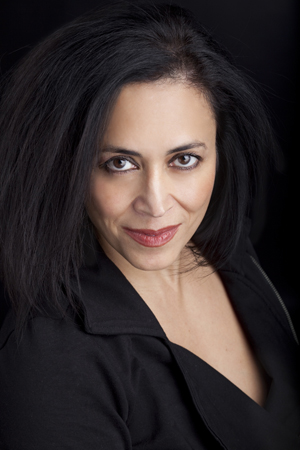
Pari Danian
Pari Danian – Writer, Sculptor, Poet, Photographer, and More
www.sculptressart.com

“I sat at the typewriter for the first time and fell in love with the words that emerged like drops, one by one, and remained on the white sheet of paper … every drop became something that if spoken would have flown away, but on the sheets as words, became solidified, whether they were good or bad.” Oriana Fallaci, Journalist, Author, 1930 – 2006

These words by Oriana Fallaci inspired me to express myself through the art of literature. They lifted my doubts and I no longer hesitated to write what I thought.

Her journalistic compelling conviction to uncover the truth sparked my passion to seek the truth of my world within and display that in my naked words.

Oriana Fallaci began her career in journalism during her teens, becoming a special correspondent for the Italian paper Il Mattino dell’Italia Centrale in 1946. During the next few decades, she covered many wars starting with Vietnam, the Indo-Pakistani War, the Middle East, and South America.

She raised the flags of democracy higher by exposing conspiracies. Her stories cast light on humanity around the globe, stories that otherwise would have never been heard. They changed the way we viewed the world and opened our eyes with intelligent information.

She was one of a handful of women who interviewed Ayatollah Khomeini in 1979. During this interview she addressed him as a “tyrant” and managed to unveil herself from the “chador” she had to wear on her head in order to be in the Khomeini’s presence.

“OF- I still have to ask you a lot of things. About the “chador,” for example, which I was obliged to wear to come and interview you, and which you impose on Iranian women. I am not only referring to the dress but to what it represents, I mean the apartheid Iranian women have been forced into after the revolution. They cannot study at the university with men, they cannot work with men, they cannot swim in the sea or in a swimming-pool with men. They have to do everything separately, wearing their “chador.” By the way, how can you swim wearing a “chador”?
AK- None of this concerns you, our customs do not concern you. If you don’t like the Islamic dress you are not obliged to wear it, since it is for young women and respectable ladies.
OF- This is very kind of you, Imam, since you tell me that, I’m going to immediately rid myself of this stupid medieval rag. There!”

Oriana Fallaci was the most influential journalist of the twentieth century. Her incisive insight is what everyone benefits from through the body of her work that includes “Letter to a Child Never Born,” “A Man,” “Interviews with History and Conversations with Power,” and “Inshallah.”

Oriana Fallaci

Inshallah

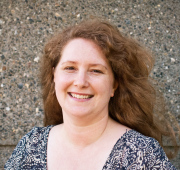
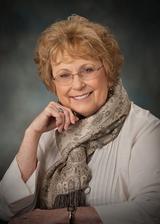
Women’s History Month – Kate’s Influence

Meet Kate Policani – Author, Writer, Blogger, Journalist and More

Kate Policani

In the spirit of Women’s History Month, I asked Kate to share a little something about the woman writer who influenced her most, and below is her offering. Fascinating! Read on…

“When considering my favorite women authors, Jane Austen is the first name that comes to mind and one of my favorite authors of all time. She is a classic author holding the status of a staple of English literature. But her writing means more to me than just classics that we all read and metaphorically dissect in high school English class. Her books, and not just the ones made into movies, provided me with a wealth lacking in my culture.

Austen’s work has a wealth of culture. When I first read them in my teen years they supplied me with rich, mature subjects at a time when I was surrounded by shallow media. The stories brim with dynamic relationships and overflow with emotional intelligence. I loved, and still love, the simplicity coupled with the complexity of life. They were the opposites of my full, loud, busy life with scant substance.

My love for Austen’s books and the modesty of the period spurred me to seek other authors from her era. Bronte, Burney, and others provided me with entertaining stories as well as insight into my own culture’s downfalls and virtues. I lived in a culture where I had to cling to and protect my own innocence from intruding media filled with pornography and violence. It seems life is more violent and explicit now, at least in public, than it was through their eyes.

Austen and her contemporaries struggled with life as second-class beings, dependent on their fathers and husbands for freedoms most of us take for granted these days. Their culture was very different but their desires were the same: to be loved, to be respected, to protect those they loved, and to succeed in life. All this, Austen conveyed through story and character in a way that brought the struggles to life. As women who can own property, can be educated equally with men, and can make legal decisions ourselves, we can learn a lot from Austen’s work about strength and resourcefulness. We can remember that the freedoms we have aren’t something that women have always enjoyed, and we can be grateful to those who won those freedoms for us.”

Thank you Kate for sharing your thoughts about the woman writer who influenced you. You are not alone; there are many Jane Austen fans, and isn’t it wonderful to know that even generations later, she is still shaping lives with her masterfully crafted words.

To learn more about Kate’s wonderful collection of books and writings (and purchase a copy or two), visit her at:
Kate Policani.com
Facebook
Twitter
Goodreads

Women’s History Month – The Influence of Women Writers

During March, we take the opportunity to highlight the accomplishments that women have made to this country. I, too, want to recognize Women’s History Month by celebrating a variety of women writers; many who have influenced me. I encourage you to make a special effort this month to read works by the talented women writers I have chosen to spotlight below. In addition, I invited four of my contemporaries (Kate Policani, Pari Danian, Simone da Costa, and Sean Wright) to share their thoughts on the women writers who influenced them. They graciously accepted my invitation and their posts will appear every Friday this month on my web site. So join me and my guest writers in this month-long celebration of the women writers we love.

Ann Petry was the first black woman author to top sales of over one million copies for her novel, The Street (1946). She also wrote short stories and children’s books.

Elizabeth George is an American who writes mysteries set in England. Her popular Inspector Lynley Mysteries have been adapted for TV by the BBC.

Helene Johnson’s poems are considered a model for aspiring poets. Her best known work, Poem, is still celebrated today for its simple majesty. She died in 1995 at age 89.

Susan L. Taylor served as editor-in-chief for Essence magazine for almost twenty years. In the Spirit is a collection of her inspirational columns from that magazine.

Anita Shreve has written more than a dozen novels, several of which have been adapted to the big screen. Early in her writing career, she won an O. Henry prize for short fiction.

Tina McElroy Ansa is known as a novelist but her talents extend to journalism, screenwriting, publishing and more. Her novels have held spots on many national bestseller lists.

Bebe Moore Campbell was a best-selling, award-winning author whose works dealt heavily with race relations, social causes and effects, and socio-economic gaps. She died at age 56, a treasured legend.

Alice Dunbar-Nelson published her first book, Violets and Other Tales in 1895. However, she achieved success with The Goodness of St. Rocque, which showed blacks in roles other than as slaves or minstrels.

Margaret Atwood won the Booker Prize, an international prize for fiction, in 2000. Her works have been translated into more than forty languages.

Frances Ellen Watkins Harper published her first volume of poetry at age twenty in 1845. Her writings tackled the tough issues of her time such as abolition, human rights and equality.

Jamaica Kincaid immigrated to the U. S. at age 16. She was a staff writer for The New Yorker and authored many short stories, articles, essays, as well as novels.

Sandra Brown has published more than seventy novels in the romance and other genres. Her works appear regularly on the New York Times bestseller list, and have shattered worldwide sales records.

Valerie Wilson Wesley writes children’s books (Willimena Rules), mysteries (Tamara Hayle Mysteries), and novels. Many of her works have achieved bestseller status and won awards.

Nora Ephron turned to screen and novel writing after a successful career as a journalist. Her works have been published in Esquire, New York Times magazine, and other notable publications. Later in life, she became a film director and producer.

Diane McKinney-Whetstone’s novels have captured many awards including the Black Caucus Literary Award for Fiction — twice! She also writes short works which have appeared in magazines and anthologies.

Anne Rice has written more than 28 novels, several of which were made into movies. Later in her writing career, she turned to Christian writing.

Sandra Cisneros’ collections of stories have appeared on bookshelves since the eighties. Few American writers have achieved the international success that she enjoys; this, a testimony to the universal messages embedded in her works.

Jan Karon started writing at ten years old and won her first writing competition at that age. She is the award-winning, bestselling author of the Mitford series and Father Tim novels.

Connie Briscoe’s works have made frequent appearances on bestseller lists nationwide. She has penned novels, a novella and non-fiction works.

Eudora Welty is an American literary icon, who, upon her death in 2001, left the home where she lived and wrote her fiction and essays to the state of Mississippi.

A Librarian’s Tribute

Lori Kirtley Wilson

A few days ago, I learned that my high school librarian, Lori Kirtley-Wilson passed away (pictured above).

A few days ago, I learned more about her than I had learned during the three years I walked the halls of my high school.

In high school, I knew her as a caring, dedicated, gentle adult who enjoyed working with the school’s drill team. She spent as much time preparing those of us on the drill team to be ladies as she did leading us through practices, selecting uniforms, and coordinating appearances/trips. I can still hear her saying, “Ladies, never forget, you are the epitome of womanhood.” During the summer, it was nothing to see her driving around a car full of squiggly, giggly, nerve-racking girls, and always with a smile.

A few days ago after reading her obituary, I learned that Mrs. Kirtley-Wilson had written a book on dreams and angels. I learned she had been a Queen of the Red Hat Society. I learned that she was active in church and community.

Surprised by all the new things I learned about Mrs. Kirtley-Wilson I felt sadness that I had not taken the time when in her presence to learn the woman who wore the title of librarian and drill team sponsor. It made me wonder how many other people I interface with and yet take for granted. How many other people have I not fully connected with because I haven’t explored the person behind the title?

I don’t want to learn about the lovely aspects of a person or their personal achievements from an obituary. I don’t want to make that mistake again. So today and for as long as I breathe, I commit to look beyond the title of librarian, teacher, mechanic, president, letter carrier, bully, teller, parent, etc. to see the real person inside. It might not be a successful look-see. Then, again, it might. My intention might be misunderstood or met with resistance. Then, again, it might not. But the least I can do is try. The least I can do is venture forth and try to make a human-to-human connection. This much I owe to Mrs. Kirtley-Wilson. This much I owe to myself.

Mrs. Kirtley-Wilson, I am sorry I am just now learning of your full greatness, but I thank you that even in death, you are still pushing me to be the best I can be. Have fun in heaven. I’ll see you there one day, and I promise when I get there, we’ll laugh about those special drill team days and have great conversations about books.

My love and thanks to other librarians who I have connected with in small and great ways:
Laverne Brown, Dallas Public Library
Victor Kralisz, retired, Dallas Public Library
Karen Beckett, Irving Public Library
Janet Vance, Richardson Public Library

My Valentine’s Gift to You

I am tickled pink to send you love and blessings on this recognized day of love. And in honor of Valentine’s Day, I want to give you a gift to show you how much I appreciate your loving support, likes, and comments. So here’s my Valentine’s gift to you…

First peek at my new book cover…

Just click above on the “What’s New?” tab and take a look. I am so excited that the book (my first major publication since 2006) is almost here and so glad you’re taking this journey with me.

Have a love-ly day and I’m off to go find chocolate-covered strawberries. Yum!

Black History Month Featuring Black Literary Facts

Growing up in a town that had one black teacher on staff (and only for one year during my high school days), I recognized a deficit in my bank of African American literature and authors. So every year during Black History Month I try to expand my knowledge about black authors and/or black literary works, and every year I am amazed at the treasures I unearth. This year I’m sharing some of my newfound treasures with you. You may already be familiar with some of the titles, authors or facts and if so, great. Maybe you know of others you can share with me.

Black Literary Facts:
Octavia Butler, 1947 – 2006, was a pioneer in the sci-fi genre. She was one of few females and blacks who wrote in the genre. In 1995, she received the John D. and Catherine T. MacArthur Foundation, one of the coveted genius grants.

E. Lynn Harris was a groundbreaking author who died in 2009 but left an impressive literary mark. He virtually created a new genre–gay, black men in conflict and in loving relationships. His best known work is Invisible Life, 1991.

Dorothy West is recognized as one of the last surviving members of the Harlem Renaissance. She is best known for The Living Is Easy, 1948 and The Wedding, 1995.

Langston Hughes was a poet, playwright, editor and novelist. His most famous poem, The Negro Speaks of Rivers was written and published a year after he graduated from high school. His home in New York City has landmark status.

Christopher J. Perry founded the Philadelphia Tribune in 1884 and this newspaper continues to operate. He began writing articles at age 14 and promoted to editor before striking out on his own to start the Tribune.

Amiri Baraka served as Poet Laureate of New Jersey and founded the Black Arts Movement in Harlem in the 1960s. In addition to poems, he has written essays and dramas. He is the recipient of an Obie, NEA and Rockefeller grant.

Third World Press is the oldest and largest publisher of black thought and literature in the U.S. It was founded in 1967 by Haki R. Madhubuti, Johari Amini and Carolyn Rodgers.

Novelist Terry McMillan began her distinguished career as a Doubleday fiction contest winner. She won the American Book Award and is known for her books, Mama and Waiting to Exhale.

J. California Cooper began her writing career as a playwright. She turned her dramatic storytelling skills to fiction, publishing Homemade Love in 1986, a collection of stories which won her an American Book Award.

Zora Neale Hurston is known as the most prolific black woman writer of the first half of the 20th century. She is best known for Their Eyes Were Watching God and Dust Tracks on a Road.

Two-time Pulitzer winner August Wilson was a playwright. He is best known for The Pittsburgh Cycle, a series of plays covering ten decades.

Poet Sonia Sanchez was heavily involved with the Black Arts Movement. She is a Pew fellow and has authored more than 16 books.

James Baldwin, novelist, poet and essayist is best known for Go Tell It On The Mountain, which is considered an American classic. He often credited his stint as a preacher for turning him to writing.

Dr. Jewell Parker Rhodes is a multiple award winner for her novels and other works. Some of her honors include the American Book Award, PEN, and NEA.

NY Times Bestselling author Zane publishes and writes black erotica under Strebor Books. She has taken a taboo subject and turned it into a platform of freedom for millions.

Ntozake Shange, an Obie winner is best known for her choreopoem/play For Colored Girls. Her works speak to issues that impact not just black but all women.

James Weldon Johnson is best known as the composer of Lift Every Voice and Sing, the song which the NAACP dubbed the Negro National Hymn. He was also a journalist, poet and novelist.

Gorilla, My Love was Toni Cade Bambara’s most recognized work. Its collection of stories depicted blacks in non-stereotypical fashion. She also wrote essays and scripts.

The Revolution Will Not Be Televised is Gil Scott Heron’s oft quoted composition. His entire body of work influenced neo soul, hip hop, and spoken word.

U.S. National Book Award and Newbery Award recipient Virginia Hamilton was the author of 41 books in multiple genres. She won every major award for children’s books.

Encountering the Written Word

Words, writing, and books….these are topics I can talk about for hours, and typically do with a friend who is as into these topics as I am. Recently, this friend and I were talking, trying to determine if we could live one day without encountering the written word. Not necessarily in book format but in any form. We decided we couldn’t but to help us reach that decision, we walked through a “normal” day. Below is a sample of a normal day for me and as you’ll see, I could not avoid the written word all day (of course this makes me happy).

A Normal Day:
I wake up and start journaling my dreams and thoughts. Words. Before I finish journaling, I want coffee. So off I stumble to the kitchen to make a few cups. Since I’m a coffeeholic, there’s no bumping into written words since there’s no need to read directions. All that’s required is action (an aspect of writing that we’ll leave for another day) and barely any thought.

Resettled in my favorite chair, the bed or the sofa, I sip coffee, finish journaling (is one ever finished journaling?) and decide to catch the morning news as I wait for my computer to boot up. Turning to a local channel, I see words on the screen. Did you catch that? …words on the screen.

My cell phone dings and by the sound I know it’s an incoming email—words. I turn off the TV and turn toward the computer to check email and then write, write, write. Nothing but words. (Okay, so maybe that’s cheating since I am a writer and that’s what I do most days.)

Some hours later, it’s errand-running time. I turn off the computer and dash out of the house. Again no words, but lots of action. As I’m running errands, I read billboards, road signs, traffic alerts, etc. Words, words, with a few numbers thrown in (yuck to numbers!). I sign my receipt at the grocery store (one of my errands) and see enticing words offering me a percentage off of this, a percentage off of that, words and numbers (yuck to numbers!).

Back at home, I settle back into my work, writing, which is not work at all except when it comes to editing (yuck to editing!). My stomach growls and it’s getting dusky outdoors so I know it’s time for dinner. But it’s also time to exercise so I grab a quick snack and off I rush to the gym or track. No written words required. Just action and sweat. In an hour, I am back home and seriously scouring the fridge for a real meal. I throw one together which does not require written words except when I decide to try a new recipe, then it would be an encounter with written words. But trust me, that doesn’t happen often. I try to spend as little time as possible in the kitchen.

To end the day, I watch TV–no words unless I accidentally hit the subtitle button or view certain commercials such as those featuring class action law suits against drug companies or Meow Mix or the starving artist art show. Finally, after the evening news, it’s time to read myself to sleep–words, words, and more words. Hmmm…are there words in my dreams?

What about you? Can you make it through a “normal” day without encountering any written words? If so, how in the heck did you do that?

Three Wise Men – Three Wise Books

As I packed my Christmas decorations to store for another year, I unintentionally spent a few extra minutes staring at the three wise men in my nativity set. For some reason looking at those characters brought to mind the titles of three books: the Holy Bible, the Weight Down Workshop, and the Artist’s Way. Knowing this was not a coincidence, I sat down and waited for the connection between these two seemingly unrelated things. Here’s what came to mind:

The three wise men presented valuable gifts of frankincense, myrrh and gold to baby Jesus.—
I consider the three mentioned books valuable gifts to me (and others of course).

The three wise men spent time with the holy family.
I can’t begin to tally the number of hours I spend reading these books.

The wise men’s lives were no doubt transformed by the holy experience.
My life was transformed by these books.

And that is the crux of the matter. Just like the three wise men were transformed by their experience with Jesus, so too was I transformed by Jesus through these books. Let me explain more fully, starting with my first gift—the Holy Bible.

I was introduced to the Bible at a young age. Through my attendance at Sunday school, worship service, and special programs, I learned scriptures and the teachings of Jesus Christ. This gave me a clear understanding of how I was supposed to act (even though I didn’t/don’t always act right), a strong moral foundation (even though my foundation cracked/cracks from time to time), and a sense of belonging (as a member of the family of believers). I also think the Bible was one of the original books that stirred my creative nature. Have you noticed how many great stories are in the Bible? …the wise, colorful parables? …the beautiful language, poems, and words? It truly is an amazing book and I am forever grateful to my elders for introducing me to it.

As I matured, I continued my Christian walk, engaging in ministry work, tithing, and attending Bible study. In one particular Bible study group, I was introduced to the Weight Down Workshop (WD). WD is a weight loss program that marries faith with dieting. I joined the program expecting to shrink in dress size and grow in faith, which I did. But the most amazing outcome was I met God face-to-face. What do I mean? I learned that after all those years of going to church, studying the Bible and more, I only had head knowledge of God. I didn’t view God as “real,” as someone with whom I could develop a deep, intimate relationship. To me, God was a symbol, a concept, an unattainable entity. WD revised my view of God. One of the exercises in the workbook challenged me to select a task for God to perform and to make that task so specific that I would know without a doubt it was Him. So for my task I said, “Okay God, if you’re real, you’re going to make my Bible fall open to a specific passage that will not only prove you’re real but also prove you love me.” I picked up my Bible and let it fall open. My eyes went straight to a passage that met my criteria. I was blown away! I remember crying and praising God. It felt like my heart grew four times larger…and warmth; I felt such warmth. And here it is years later and I’m still so very grateful to WD for my second, life-changing gift–making God real to me so that I could begin a heart relationship with Him.

As my heart relationship with God grew so too did my faith, and the biggest boost to my faith came through the Artist’s Way. This workbook/journal liberated me to pursue a life of purpose. But how did that increase her faith? you may be thinking. Can I tell you the fear I felt at giving up a steady paycheck and benefits? Can I tell you the monumental faith that is required to live day-by-day? It’s been almost two years since I left the path of the “tried-and-true-and-dissatisfied” to follow the path of purpose. And even though there have been many rough patches, I can honestly admit I would make the same decision if I had a do-over. Want to increase your faith? Step off the path of the tried-and-true and live day-by-day, following God’s commands. Talk about a faith walk but oh what a transformative gift!

So there you have it. The connective link that ties the three wise men to three wise books–being transformed into a better Ann. What about you? What three books, songs, poems, people, lessons, etc. have been especially transformative in your life?

The Next Big Thing Blog Hop

A number of authors are participating in The Next Big Thing Blog Hop. What’s that, you ask? It’s an opportunity for readers to learn about an author’s next big thing–a book, movie, research trip, conference, etc. by hopping from blog to blog. On participating sites, readers, writers or literary followers can read interviews, book excerpts, interesting facts, and more. Join the blog hop by reading my comments below concerning my next big thing, Fuller’s Curse, which will be published in April 2013. Then, blog hop by clicking on the other author links that I have presented below. At their site, you can learn about their next big thing.

What is the title of your next book? Fuller’s Curse

Where did the idea come from for the book? Fuller’s Curse is a fictional horror story based on the Biblical scripture about generational curses and blessings. At the time that that scripture was floating around in my head (July 1999), John F. Kennedy, Jr.’s plane went down and I remember asking myself, Are they cursed? And that was the start of Fuller’s Curse. But let me be clear. I am NOT saying the Kennedys are cursed. I wouldn’t presume to label any family as cursed or blessed. All I’m saying is those two incidences converged to form the idea for the story.

What genre does your book fall under? Horror, which I never thought I would write in a million years even though I am a Stephen King fan. Actually, I thought Fuller’s Curse was a mainstream or literary story but the market dictated otherwise.

Which actors would you choose to play your characters in a movie rendition? What a fun thing to think about… I think the young actress Keke Palmer would do a bang-up job as Hope. I really love her work. She’s dynamic. I would choose Alfre Woodard as Deborah. She’s another actress who always shines and turns in outstanding performances. Louis Gossett, Jr. as Governor is a must. I think his body build and demeanor is so Governor. And for Mattie…well, I have no idea. How about a casting call for an elderly, small, short, feisty African American woman?

What is the one-sentence synopsis of your book? A mother discovers her family is cursed and must commit the ultimate sacrifice to rid the family of the curse.

Will your book be self-published or represented by an agency? Fuller’s Curse is published by A New Thing Publishing, my publishing company, which is another thing I thought I would never do–form and run a publishing company. But, I am learning through maturity to never say never.

How long did it take you to write the first draft of your manuscript? The first draft took eleven months to write. I started the book at a writer’s retreat in Hawaii in the fall of 2000 and finished it the following summer after unplugging the phone, disconnecting the doorbell and parking the car in the garage. I told my family and friends I was dead so don’t call or visit. That’s the only way I was able to finally finish the first draft. The second draft, which I thought would be the final draft, took five months to complete and I tell you by the end of that draft I didn’t want to write anything else about the Fuller family. But then, we made some book cover decisions which forced me to re-write a few scenes. Aaaauuuugggghhhh! I thought I was going to lose my mind. But luckily those rewrites only took a few weeks. I am currently reviewing the ARC (Advanced Reading Copy), looking for typos and any glaring errors. The ebook will be available to readers April 23, 2013; the print/hard copy version a month later.

What other books would you compare this story to within your genre? My first thought is I haven’t a clue, but as I think a bit more, I’d have to say The Living Blood by Tananarive Due. She is a master story teller and an excellent writer. I wouldn’t mind being compared to her (smile!).

Who or what inspired you to write this book? The short answer is the Bible and the Kennedys. The long answer is presented above under the question, “Where did the idea come from for the book?”

What else about your book might pique the reader interest? For those who refuse to read books with violence or stories set in Dallas, don’t buy or read this book. For everybody else, regardless of whether you read horror or not, buy and read this psychological and emotional thriller that follows Deborah Fuller-King as she tries to discover why so many of her family members are dying accidentally. She’s heard rumors of a curse but really that’s just her crazy cousin talking, isn’t it? Besides curses aren’t real, right? At least that’s what she thinks until another family member comes up dead.

Ready to blog hop? Here are a few authors with big things to read about.
www.goldiebrowning.com
www.kat-smith.com
www.nikkicoe.com

By the way, if you don’t have time to blog hop now, come back later. We’ll be here!